
The Rising Tide of Childfree Dating: Why Dedicated Apps Matter
How many times have you swiped through a dating app, only to discover someone’s profile mentions their desire for a "future family’? It’s exhausting, and frankly, a waste of time if you’ve consciously decided a childfree life is the right one for you. Mainstream dating apps aren’t built for us, and that"s okay. It just means we need to be strategic about where we spend our energy.
The good news is that the demand for dedicated childfree dating spaces is growing. As more people openly embrace a life without children, the need for platforms that cater specifically to this lifestyle increases. It's not just about avoiding awkward conversations; it's about finding someone who fundamentally shares your vision for the future. This shared foundation is incredibly powerful.
This isn’t just a trend; it’s a reflection of a broader societal shift. While having children is still often presented as the default life path, there’s increasing acceptance – and even celebration – of alternative choices. According to a 2023 Pew Research Center study, roughly 44% of adults ages 25-39 have never had children, and a growing percentage are intentionally choosing not to. That’s a huge pool of potential partners looking for the same thing.
Dedicated apps save you valuable time and emotional energy. No more sifting through profiles hoping to find someone who understands and respects your choice. They offer a space to connect with others who are already on the same page, fostering a sense of community and shared understanding. Choosing a childfree life is valid, and finding someone who celebrates that with you is achievable.
Where are the childfree dating apps??? 👏
— Meagan ™🥥🌴 (@meaganhook) July 23, 2020
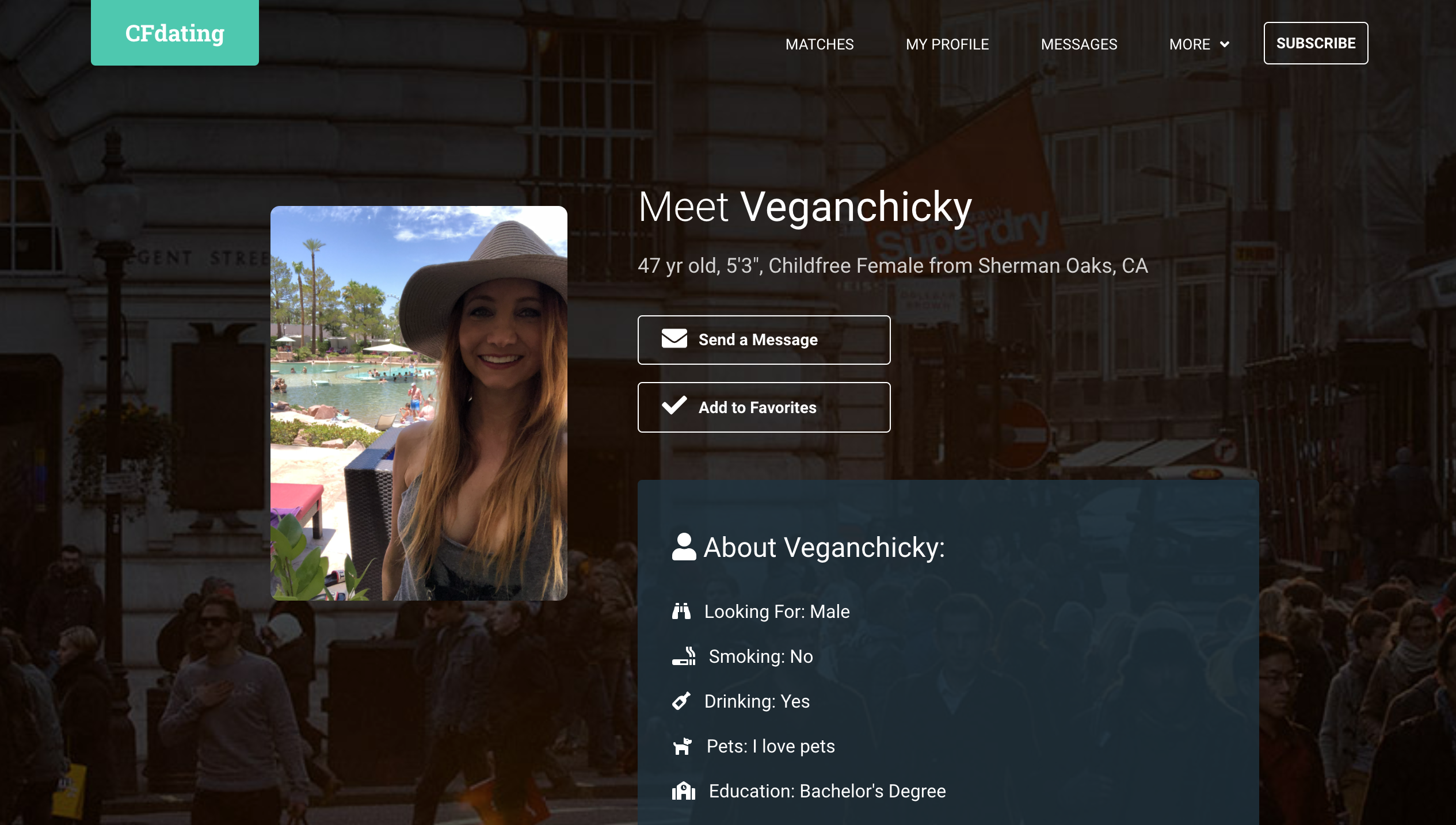
CFdating: The OG Childfree Space – Still Worth It in 2026?
CFdating.com has been around for a while – it’s arguably the pioneer in the childfree dating world. Launched in 2008, it was one of the first platforms specifically designed for people who don’t want children. For many, it was a breath of fresh air, a place where they didn’t have to justify their choices or worry about disappointing potential partners.
As of late 2026, the user interface feels a bit dated. It's functional, but it lacks the sleekness and modern design of newer apps. The user base, while dedicated, is smaller than those of mainstream apps. This means fewer options, but also a higher concentration of people who are genuinely committed to a childfree lifestyle. You’re more likely to find someone truly aligned with your values here, but you might have to be patient.
The pros are clear: a highly targeted audience and a community built on shared values. The cons? The smaller user base and the somewhat clunky interface. Membership costs vary, with options ranging from basic (free) to premium, which unlocks additional features like unlimited messaging and advanced search filters. Premium memberships currently run around $29.99 per month.
Is CFdating still worth it in 2026? If you’re looking for a dedicated space and don’t mind a slightly older platform, absolutely. It’s a solid option, particularly if you’ve had negative experiences on mainstream apps. Just manage your expectations regarding the size of the dating pool.
EliteSingles: Reaching a Professional Crowd Without the Baby Talk
EliteSingles takes a different approach. It’s not exclusively for childfree individuals, but it offers robust filtering options that allow you to specifically search for matches who share your views on family and children. This platform generally attracts a more mature, educated, and professional demographic – think people in their 30s, 40s, and beyond who are serious about finding a long-term partner.
The key differentiator is their in-depth personality test. This isn't just a superficial questionnaire; it delves into your values, lifestyle, and relationship goals. The algorithm then uses this information to suggest compatible matches. While it doesn't guarantee you'll only see childfree profiles, it significantly increases your chances of finding someone aligned with your preferences. You can also manually filter for "no children’ and ‘don’t want children" in the search criteria.
However, this comes at a price. EliteSingles is one of the more expensive dating apps on the market. A basic membership is around $19.95 per month, but you’ll need a premium membership ($34.95 - $59.95/month) to access all features, including unlimited messaging and the ability to see who has viewed your profile. Is it worth the cost? If you’re a busy professional who values quality over quantity, and you’re willing to invest in finding the right partner, it could be.
I’ve spoken to several users who've had success finding compatible partners on EliteSingles, specifically mentioning the effectiveness of the personality test in identifying shared values. It’s a good option for those who are tired of swiping and want a more curated dating experience.
Childfree Dating App Comparison - 2026
| Platform | User Demographic | Search Filters (Childfree Focus) | User Base Size | Notable Features |
|---|---|---|---|---|
| CFdating | Specifically for individuals who have consciously chosen a childfree life. | Highly focused; primary filter is 'childfree'. Allows detailed explanation of reasons for choosing a childfree life. | Relatively smaller, dedicated community. | Strong emphasis on shared values and lifestyle; actively promotes a childfree-positive space. |
| No Kids Dating Site | Singles explicitly seeking childfree partners. | Dedicated filters for 'no children' and 'no desire for children'. | Smaller, specialized user base. | Focuses solely on connecting those who don't want kids, aiming for a high compatibility rate. |
| Bumble | Broad demographic, skewing towards younger adults. | Offers a 'Do you want kids?' filter. Users can select 'Not right now', 'Yes', or 'No'. | Large and diverse user base. | Women make the first move; promotes respectful interactions. |
| OkCupid | Diverse demographic, known for inclusivity. | Extensive profile questions allow users to detail their views on children, family, and life goals. Supports nuanced answers. | Very large user base. | Personality-based matching system; detailed profiles encourage open communication. |
| Match.com | Wider age range, generally seeking long-term relationships. | Allows filtering based on 'Family Plans' – users can indicate if they want children or not. | Large, established user base. | Offers various communication tools and event opportunities. |
| eHarmony | Typically attracts individuals seeking serious, committed relationships. | Focuses on 'lifestyle compatibility' which indirectly addresses family goals; users answer questions about values and future aspirations. | Substantial user base. | Compatibility quiz aims to match users based on core values and beliefs. |
| Hinge | Designed for those seeking relationships, with a focus on deleting the app. | Users can state their 'Family Goals' preferences, including options related to wanting children. | Growing user base, popular with millennials and Gen Z. | Promotes meaningful interactions through prompts and curated matches. |
Illustrative comparison based on the article research brief. Verify current pricing, limits, and product details in the official docs before relying on it.
Beyond the Big Two: 5 More Apps Catering to the Childfree
While CFdating and EliteSingles are excellent starting points, there are other apps worth considering. OkCupid stands out for its detailed profile questions, which allow you to be very specific about your preferences, including your views on children. It’s a good option for those who want to express themselves fully and find someone who truly understands their values.
Bumble, with its female-first approach, can be empowering. While not exclusively childfree, you can state your stance on having children in your profile. The app also offers badges to indicate your lifestyle choices, which can help you quickly identify like-minded individuals. It's a strong choice if you prefer a more proactive dating experience.
Match.com is a long-standing dating site that now allows you to filter by "family plans," making it easier to find someone who shares your views on starting a family (or not). It has a large user base, but you'll still need to be upfront about your childfree status. eHarmony focuses on compatibility matching, and their questionnaire covers lifestyle factors, including your views on having children.
Hinge markets itself as the "dating app designed to be deleted," and its focus is on building meaningful connections. They also have options to specify your family goals, allowing you to indicate whether you want children or not. It's a great option if you're looking for something more serious than casual dating. Finally, don't discount Facebook Dating; it's surprisingly effective, especially if you join childfree-focused groups on the platform.
Each app has its strengths and weaknesses. The best approach is to experiment and see which one feels right for you. Don’t be afraid to try a few different platforms until you find a community where you feel comfortable and can connect with like-minded individuals.
Decoding App Profiles: Red Flags and Green Lights for Childfree Dating
Finding someone who explicitly states they don’t want children is a green light, obviously. But look beyond that. Pay attention to how they talk about their future. Do they mention career goals, travel plans, or personal hobbies? These are good signs. A profile that focuses solely on traditional family values might be a red flag.
Beware of vague language like “open to possibilities” or “maybe someday.” This often translates to “I haven’t fully thought this through, and I might change my mind.” It’s better to be with someone who is absolutely certain about their stance on children, one way or the other. Also, be wary of profiles that don’t mention children at all. It could mean they haven’t considered the issue or are afraid to be honest.
Clearly communicate your own childfree status in your profile. Be direct and unambiguous. You could say something like, “I’ve consciously decided not to have children, and I’m looking for someone who feels the same way.” Don’t apologize for your choice or try to soften the blow. It’s okay to be firm and confident. Remember, you’re looking for someone who accepts you for who you are.
Look for shared values beyond just the childfree status. Do they share your interests, your sense of humor, your political views? A strong connection based on shared values is essential for a long-term relationship. Don't settle for someone who just checks the 'no kids' box.
- Green Light: Explicitly states they don’t want children.
- Green Light: Focuses on personal goals and passions.
- Red Flag: Vague language like 'open to possibilities'.
- Red Flag: No mention of children at all.
- Red Flag: Primarily focuses on traditional family values.
Safety First: Navigating Online Dating as a Childfree Individual
Online dating always carries some risk, but as a childfree individual, you might be particularly vulnerable to encountering people who don’t understand or respect your choices. Always verify profiles before meeting anyone in person. Reverse image search their photos and check their social media accounts.
Meet in public places for your first few dates. Tell a friend or family member where you’re going and who you’re meeting. Trust your instincts. If something feels off, don’t hesitate to end the date and leave. It’s better to be safe than sorry.
Be wary of people who ask for money or personal information early in the relationship. Scammers often target vulnerable individuals, and they may try to exploit your desire for connection. Don’t share your address, bank account details, or any other sensitive information with someone you’ve just met online.
Remember, you have the right to say no. Don’t feel pressured to do anything you’re not comfortable with. Your safety and well-being are paramount. If someone is disrespectful or dismissive of your childfree lifestyle, walk away. You deserve someone who values and respects your choices.
The Future of Childfree Dating: Trends to Watch in 2027 and Beyond
I anticipate we’ll see a continued rise in the number of specialized childfree dating apps. As the childfree community grows, the demand for dedicated spaces will only increase. These apps will likely become more sophisticated, offering more advanced filtering options and features tailored to the unique needs of childfree individuals. We might even see apps that cater to specific niches within the childfree community, such as childfree travelers or childfree professionals.
Mainstream apps will likely respond to this trend by becoming more accommodating to childfree individuals. We may see more prominent options to specify your views on children and more robust filtering options. However, I doubt they’ll ever fully replicate the sense of community and shared understanding found on dedicated apps.
AI could play a significant role in the future of childfree dating. Algorithms could become more adept at identifying compatible matches based on life goals and values. AI-powered chatbots could even help you craft the perfect profile and initiate conversations. However, it's important to remember that AI is not a substitute for genuine human connection.
Ultimately, the future of childfree dating looks bright. As societal acceptance of childfree lifestyles continues to grow, it will become easier for those who choose this path to find love and companionship. It’s a journey, but it’s one that’s becoming increasingly common – and increasingly fulfilling.
No comments yet. Be the first to share your thoughts!